Drainage and Filter Materials: Selection Criteria and Terzaghi's Rule
A drainage layer must pass water and hold back soil. Learn Terzaghi's filter criteria, material cleanliness and how to place French drains and geotextiles.
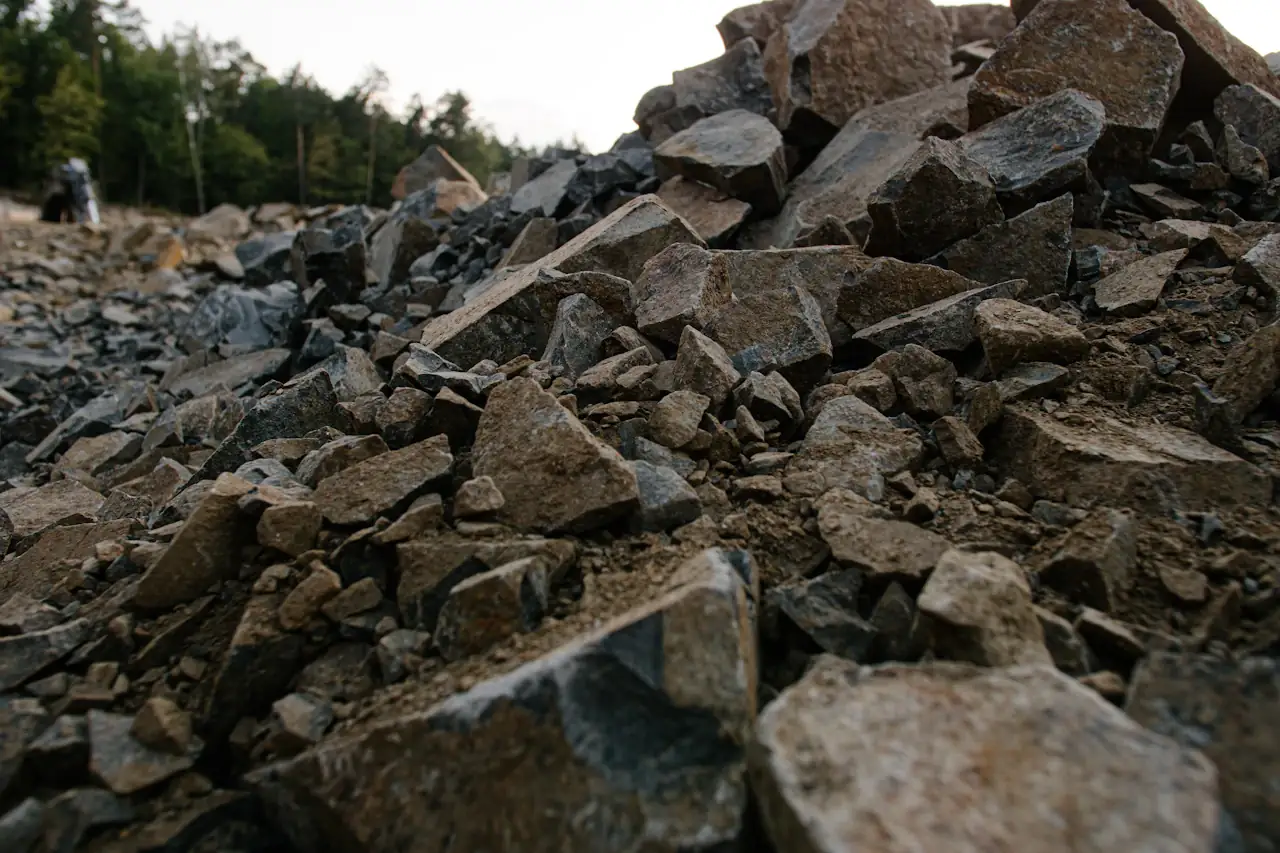
Riprap stability depends on stone size, durability and the filter layer. Learn how flow velocity relates to stone weight, what the filter does and how to place it.
Riprap is a layer of large stones protecting slopes and shorelines from flowing water and waves. Its apparent simplicity should not mislead; most riprap failures come from unsuitable stone size or a missing filter.
The required size comes from hydraulic design. In common relationships, stable stone size rises roughly with the square of flow velocity, and its weight roughly with the sixth power. Doubling velocity therefore calls for a far heavier stone. Design guides such as HEC-23 and HEC-11 provide these calculations.
Without a filter, underlying soil washes out between the stones and the layer settles. A granular filter or geotextile stops this migration while still letting water pass. Granular filter design is explained in Drainage and filter materials.
After a flood or storm, check for displaced stones and settlement. A small failure does not spread if repaired early. See also the specifications of riprap and the requirements for slope protection and water structures.
Related products
Related articlesRelated
A drainage layer must pass water and hold back soil. Learn Terzaghi's filter criteria, material cleanliness and how to place French drains and geotextiles.
Mineral filler forms a mortar with bitumen that decides asphalt stability. Learn ASTM D242 limits, the dust-to-binder ratio and how filler type affects a mix.
Base and subbase layers spread traffic loads into the subgrade. Learn how the two layers differ, what their materials need and the key points of placing them.
Record the material type, approximate volume and delivery location so availability and terms can be reviewed.