Aggregate Stockpiles: How to Prevent Segregation and Contamination
Good material can fall out of specification in a poor stockpile. Learn why segregation happens and how to build, load and protect a stockpile.
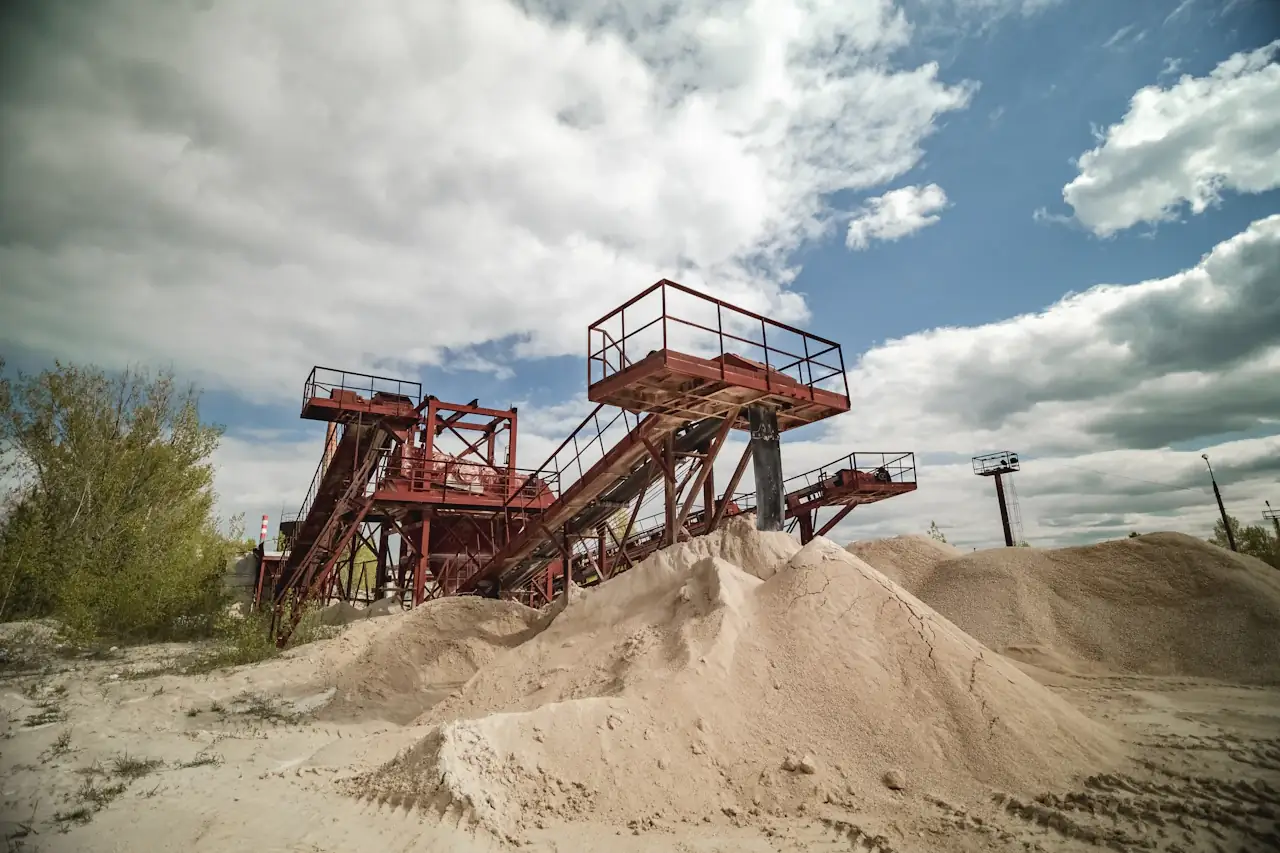
Washing separates clay, silt and stone dust from aggregate. Learn how this stage affects concrete, what equipment is common, and how water and sludge are managed.
In an aggregate production line, washing is the stage that directly affects product cleanliness. Material with suitable grading still performs poorly in concrete and asphalt if its particles carry a coating of clay or silt.
Clay and silt particles have three undesirable effects:
This is why standards limit material finer than the 75 µm sieve. In ASTM C33, for example, the limit for concrete fine aggregate is 3 or 5 percent depending on abrasion conditions.
The choice of equipment depends on the material and how contaminated it is:
Where requirements are stricter, two-stage washing is used. Double-washed sand is one example of such a product.
Washing needs water and produces muddy water. Processing units treat it in settling ponds or with thickeners and filter presses so that it can return to the circuit. Managing this well lowers water use and turns sludge into something that can be handled.
The result of washing is measured with a few simple tests:
More on these methods is in the quality and standards section. Regular monitoring of these indicators shows whether the washing line matches its feed or needs adjusting.
Related products
Related articlesRelated
Good material can fall out of specification in a poor stockpile. Learn why segregation happens and how to build, load and protect a stockpile.
A vibrating screen turns crusher output into separate products. Learn what affects screen efficiency, the main media types and common problems such as blinding.
Sand equivalent shows the ratio of sand to clay-like fines by a quick method. Learn the ASTM D2419 procedure, the calculation and the limits of interpreting it.
Record the material type, approximate volume and delivery location so availability and terms can be reviewed.