Converting Tonnes and Cubic Metres: Bulk Density and Sand Bulking
The weight and volume of materials change with compaction and moisture. Learn bulk density, the bulking of damp sand and how to estimate sand and gravel quantities.
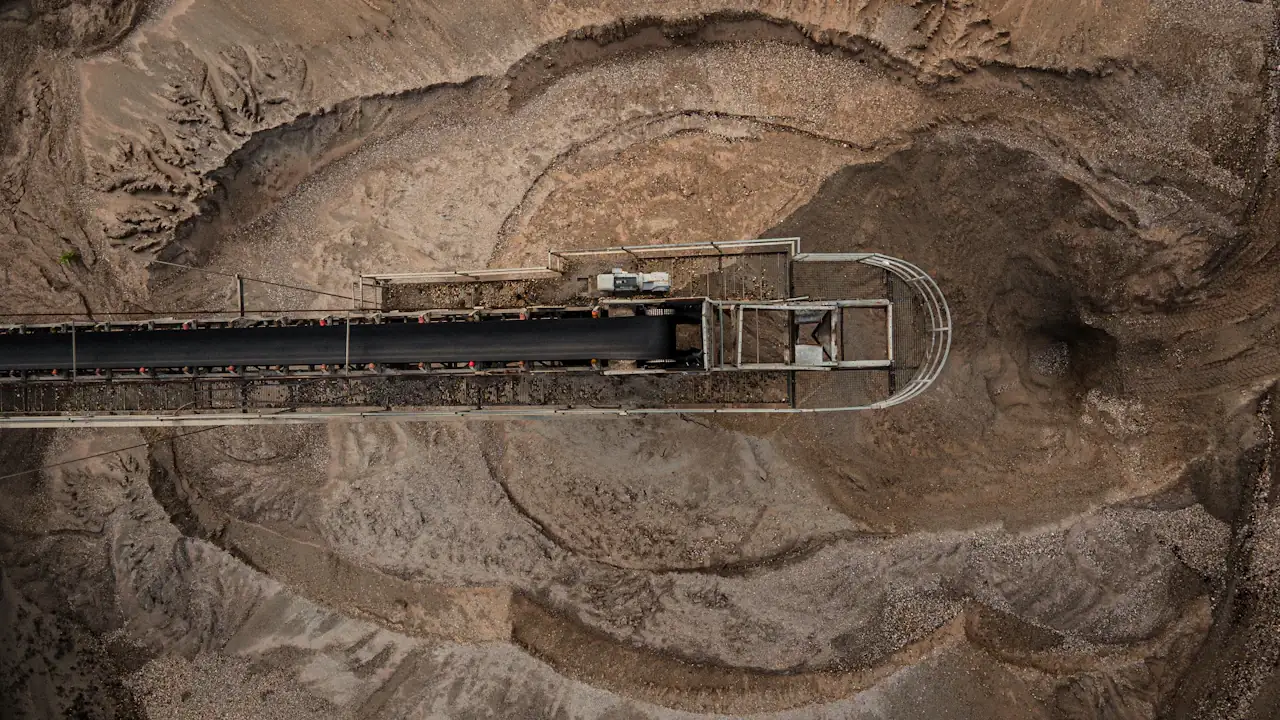
Good material can fall out of specification in a poor stockpile. Learn why segregation happens and how to build, load and protect a stockpile.
Material carefully crushed, screened and washed can lose its quality in a stockpile. Segregation and contamination are the two main risks at this stage, and both are controlled by the right working method.
When material drops from height onto the tip of a cone, coarse particles roll to the toe of the slope and fine particles stay near the top. Material loaded from different parts of this pile does not have the same grading. The effect is stronger in materials with a wide size range.
A loader should work across the whole face of the stockpile, not only its toe. Taking from one spot raises the share of coarse particles. Blending several buckets before loading also improves uniformity.
A representative sample comes from several points and depths; the method is in ASTM D75. On moisture in stockpiles, read Moisture and absorption.
Related products
Related articlesRelated
The weight and volume of materials change with compaction and moisture. Learn bulk density, the bulking of damp sand and how to estimate sand and gravel quantities.
A grading curve shows how particle sizes are distributed. Learn continuous, gap and uniform grading and the coefficients of uniformity and curvature.
An exact order prevents rejected loads and site stoppages. A practical list of what a sand and gravel inquiry needs, from application to delivery.
Record the material type, approximate volume and delivery location so availability and terms can be reviewed.