Converting Tonnes and Cubic Metres: Bulk Density and Sand Bulking
The weight and volume of materials change with compaction and moisture. Learn bulk density, the bulking of damp sand and how to estimate sand and gravel quantities.
Sand and gravel are classified by size, origin and particle shape. Learn the boundary between fine and coarse aggregate and the criteria for choosing materials.
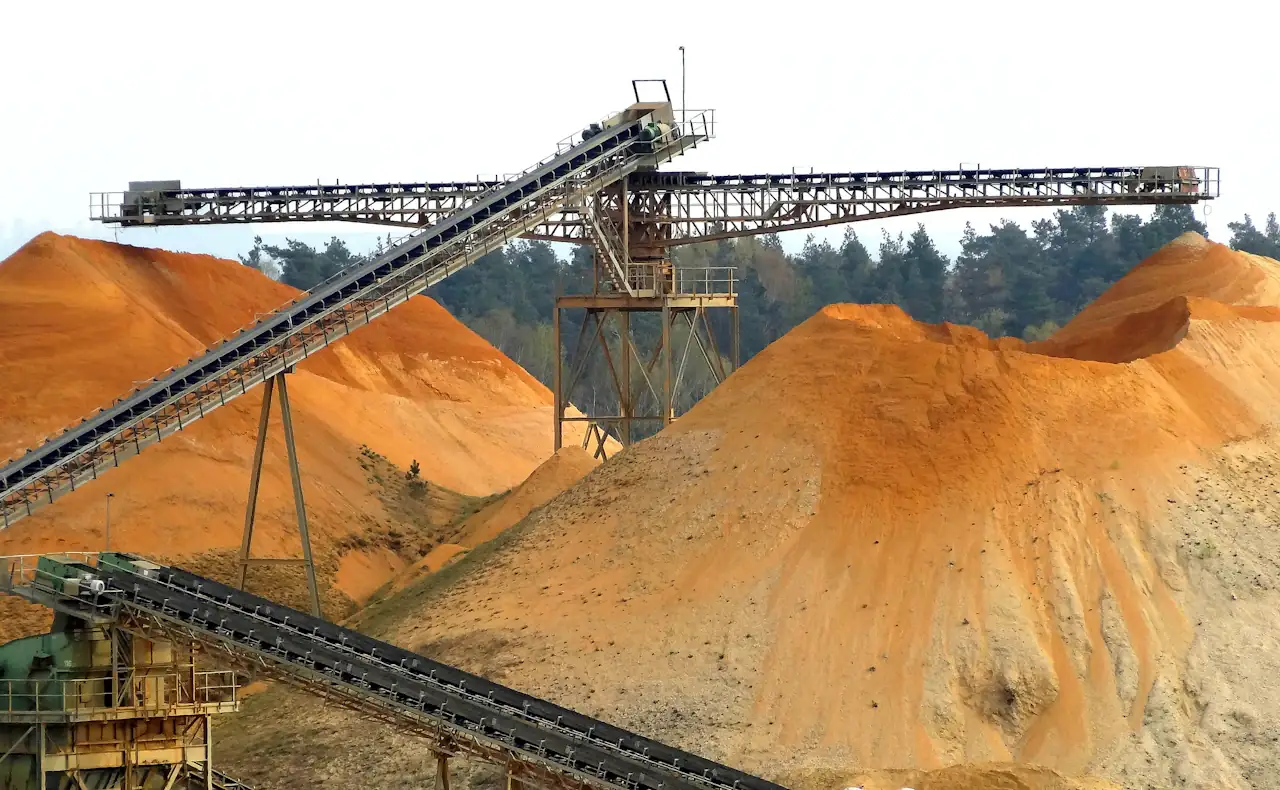
Aggregate is the general name for granular materials used in concrete, asphalt, mortar and sub-layers. In everyday speech they are known simply as sand and gravel, but engineering classification is more exact and answers three questions: what size is the particle, where did it come from, and what shape is it?
The most common boundary between fine and coarse aggregate is the 4.75 mm sieve. Material that mostly passes this sieve is fine aggregate or sand; material retained on it is coarse aggregate or gravel.
| Group | Approximate size range | Main role |
|---|---|---|
| Filler | Mostly finer than 75 µm | Filling the finest voids |
| Sand | Up to 4.75 mm | Filling the space between coarse particles |
| Gravel | Larger than 4.75 mm | Forming the load-bearing skeleton of a mix |
| Rubble stone and riprap | Large pieces | Stability through weight and interlock |
These ranges are approximate; each standard defines its own limits as percent passing each sieve.
Natural aggregate is taken from river and plain alluvial deposits, and natural erosion has rounded its particles. Crushed aggregate comes from crushing quarried rock or cobbles and has angular particles with rough surfaces.
Recycled materials form a third group, made by crushing old concrete or pavement, and their use depends on each project’s technical specification.
Two aggregates with the same grading can behave differently. Rounded particles move more freely and improve concrete workability; angular particles provide better interlock and mechanical bond. Flat and elongated particles are usually undesirable, because they make compaction harder and break sooner under load.
To choose a material, answer these questions rather than relying on a trade name:
The answers show what you need for concrete, road construction or drainage. The product list is organised on the same basis.
Related products
Related articlesRelated
The weight and volume of materials change with compaction and moisture. Learn bulk density, the bulking of damp sand and how to estimate sand and gravel quantities.
An exact order prevents rejected loads and site stoppages. A practical list of what a sand and gravel inquiry needs, from application to delivery.
Surface moisture in sand changes the water-cement ratio. Learn the moisture states, saturated surface-dry condition and how to correct batch weights and mix water.
Record the material type, approximate volume and delivery location so availability and terms can be reviewed.